A Beginner's Guide to Configuration Management for Servers
Managing one server can be simple. But when a business has several servers, keeping everything configured correctly can become difficult. Different servers may have different software, settings, users, security rules, and updates. This is where server configuration management can help. For businesses in Sri Lanka, proper configuration management can make server administration easier, more consistent, and more secure.
What Is Server Configuration Management?
Server configuration management is the process of managing and keeping server settings consistent. It can include managing:
- Operating system settings
- Software packages
- User accounts
- Security settings
- Network settings
- Application settings
- Server services
- Updates and patches
Instead of making the same changes manually on every server, administrators can use configuration management tools to manage systems in a more organised way.
Why Is Configuration Management Important?
As a business grows, the number of servers may also increase. For example, a company may have separate servers for:
- Websites
- Databases
- Applications
- Development
- Backup systems
Managing each server manually takes more time and can lead to mistakes. Configuration management helps businesses keep their servers more consistent.
What Is Configuration Drift?
Configuration drift happens when servers that should have similar settings slowly become different. For example, one server may receive a security update while another does not. An administrator may also change a setting on one server but forget to apply it to the others. Over time, these small differences can create problems. Configuration management helps reduce this type of issue by making sure the required configuration is applied consistently.
How Does Configuration Management Work?
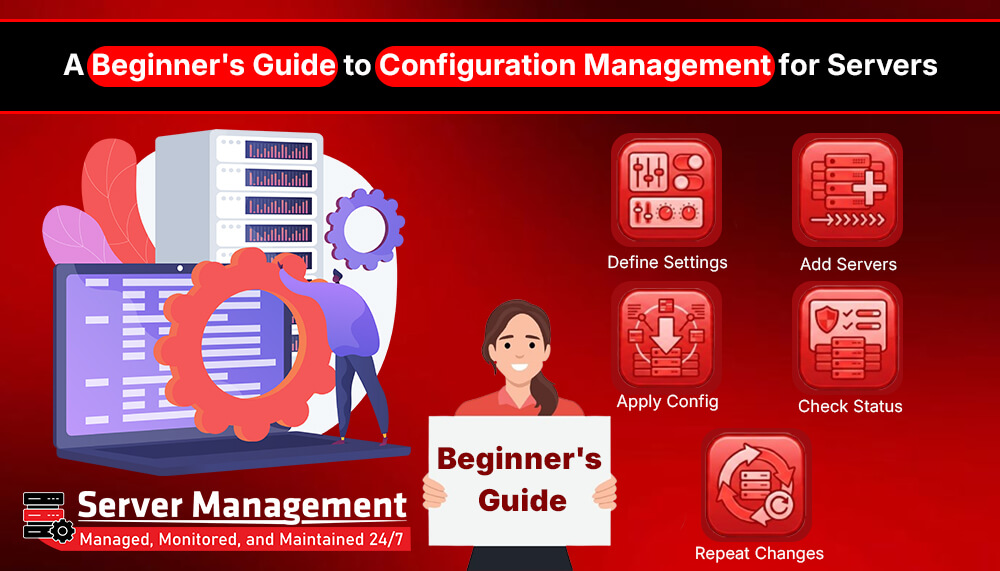
A configuration management system normally defines how a server should be configured. The administrator then applies that configuration to one or more servers. The process can be used to:
- Define the required server settings
- Add servers to the management system
- Apply the configuration
- Check the server status
- Repeat changes when required
This approach can save time when managing multiple servers.
Popular Server Configuration Management Tools
There are several tools available for server configuration management.
Ansible
Ansible is one of the popular tools used for automation and configuration management. It can automate tasks such as software installation, configuration changes, system maintenance, and application deployment. Ansible uses inventories to identify managed servers and playbooks to describe the tasks that should be performed. One advantage is that Ansible does not require an agent to be installed on managed systems and commonly connects through SSH.
Other Tools
Depending on the business environment, administrators may also use other configuration management and automation platforms. The right tool depends on the number of servers, operating systems, applications, technical requirements, and existing infrastructure.
Benefits of Server Configuration Management
Save Time
Instead of repeating the same task on every server, administrators can automate common configuration tasks. This can be especially useful when managing a large number of servers.
Keep Servers Consistent
Configuration management helps ensure that servers follow the same required settings. This can make server administration easier and reduce configuration-related problems.
Improve Security
Security settings can be managed more consistently across servers. Administrators can use configuration management to apply required security settings and help keep systems updated.
Reduce Human Errors
Manual server configuration can lead to mistakes. Automation can reduce repetitive manual work and make configuration changes more predictable.
Easier Server Management
When server configurations are properly organised, administrators can understand what settings are being used and apply changes more efficiently.
Configuration Management for Sri Lankan Businesses
Many Sri Lankan businesses now depend on websites, cloud applications, databases, ERP systems, email services, and other online platforms. As these systems grow, businesses may need to manage multiple servers. Without a proper management process, server maintenance can become difficult. Configuration management can help businesses create a more organised approach to managing their infrastructure. It can be useful for:
- Small and medium businesses
- Enterprise companies
- Software companies
- Ecommerce businesses
- Hosting providers
- Digital agencies
- IT departments
- Cloud environments
Configuration Management and Server Security
Server configuration is closely connected to security. A server may have strong security software, but incorrect settings can still create risks. Configuration management can help administrators maintain important settings across their infrastructure. It can also support regular server maintenance, patching, and security checks. However, configuration management should be part of a wider server security strategy rather than being treated as a complete security solution.
Keep Configuration Changes Documented
It is important to know what changes have been made to your servers. Using source control for configuration files and automation scripts can provide a useful record of changes. It can also make it easier for teams to review and manage infrastructure updates. This is especially useful when several administrators work on the same server environment.
When Should You Use Configuration Management?
Configuration management becomes more valuable as your infrastructure grows. You should consider it when:
- You manage multiple servers
- Servers need similar configurations
- Your team performs repeated maintenance tasks
- You need consistent security settings
- You regularly deploy applications
- Manual server management takes too much time
- You need better control over infrastructure changes
Even a small IT team can benefit from having a clear configuration management process.
Why Professional Server Management Matters
Server management requires regular attention. Software updates, security settings, performance, backups, monitoring, and configuration all need to be handled properly. For businesses without an experienced internal server administration team, professional server management can help reduce the workload.
ServerManagement.lk provides server management services for businesses that need professional support for their server infrastructure. Professional server management can be useful when your business needs help with ongoing server maintenance, security, monitoring, and configuration.
Final Thoughts
Server configuration management is an important part of modern Linux server management and IT infrastructure. It helps businesses manage server settings in a more organised way, reduce repetitive work, improve consistency, and support better security practices.
For Sri Lankan businesses running multiple servers or important online applications, having a proper configuration management process can make server administration easier and more reliable. As your infrastructure grows, automation and professional server management can help your IT team spend less time on repetitive tasks and more time focusing on your business.

